
Accelerated Resolution Therapy (ART) is changing how people heal from trauma. Unlike traditional talk therapy that can take months or years, ART uses gentle eye movements to help your brain reprocess traumatic memories quickly and effectively. You don't need to relive the details of what happened. ART works by changing how your brain stores the memory — so the distress fades while the knowledge remains.
Signs You May Benefit from ART
- Flashbacks or intrusive memories that feel as vivid as the original event
- Nightmares that disrupt your sleep and leave you exhausted
- Anxiety or panic that doesn't respond to traditional coping strategies
- Emotional numbness or feeling disconnected from people you care about
- Hypervigilance — constantly scanning for danger even when you're safe
- Avoidance of places, people, or situations connected to the trauma
- A sense that something is fundamentally wrong but you can't name it
How ART Works
ART combines visualization and lateral eye movements to help your brain reprocess distressing memories. During a session, your therapist guides your eye movements while you focus on images related to the traumatic experience.
The process allows your brain to replace the distressing images and sensations with more neutral or positive ones. The memory stays — you don't forget what happened — but the emotional charge attached to it diminishes significantly.
Why ART is Different
ART typically produces results in 1–6 sessions, compared to months or years of traditional talk therapy. It doesn't require you to describe traumatic events in detail, making it especially effective for clients who find it difficult to verbalize their experiences.

ART Therapy in Red Deer & Central Alberta

Cheryl Patterson is a certified ART Master Practitioner, listed in the ART International practitioner directory, and one of the few in central Alberta.
She has used Accelerated Resolution Therapy to help clients process trauma, PTSD, anxiety, and phobias, often in as few as one to five sessions. Whether you're in Red Deer, Sylvan Lake, Lacombe, Innisfail, or anywhere in the region, this therapy is available to you.We offer both in-person sessions at our Red Deer office and secure online sessions for clients across Alberta.
What to Expect
Your first session will involve an assessment to understand your history and goals. We'll explain exactly how ART works so you feel comfortable before we begin.
ART sessions typically run 60–75 minutes. Most clients begin to notice shifts after the very first session. The full course of treatment is usually 1–6 sessions depending on the complexity of what you're working through.


Why Choose Patterson Counselling Services for ART
Cheryl Patterson, our psychologist, holds ART Master Practitioner certification — the highest level of ART training. This isn't a general practice offering ART as an add-on. Trauma therapy is the core of what we do.
We combine ART with a deep understanding of how trauma affects the brain and body, ensuring you receive the most effective treatment possible. Our practice is women-owned, wheelchair accessible, and offers online sessions for flexibility.
Frequently Asked Questions About Accelerated Resolution Therapy
What is Accelerated Resolution Therapy?
Accelerated Resolution Therapy (ART) is an evidence-based therapy developed in 2008 that uses guided eye movements to help the brain reprocess distressing memories and experiences. Unlike traditional talk therapy, ART doesn't require you to describe your trauma in detail or relive painful events. Instead, the process works with your brain's natural ability to resolve distress, often producing meaningful relief in as few as one to five sessions.
What is the difference between ART and EMDR?
Both ART and EMDR use bilateral eye movements to help the brain process trauma, and both are evidence-based. The key differences are speed and structure. ART tends to move faster, often producing results in fewer sessions, and uses a more standardized protocol that includes a technique called Voluntary Memory/Image Replacement. This allows you to keep the memory but change the imagery and emotional response attached to it. Many clients who found EMDR slow or incomplete respond well to ART.
Is ART better than EMDR?
Neither is universally better. Both are effective, evidence-based approaches. ART tends to work more quickly for many people and follows a more structured protocol, which some clients find easier to engage with. If you've tried EMDR and didn't get the relief you were hoping for, ART may be worth exploring. The best approach depends on your specific history, how you process information, and what feels right for you. This is something we can discuss during your initial consultation.
Does accelerated resolution therapy actually work?
Yes. ART has been studied in clinical trials and is recognized as an evidence-based treatment for PTSD, trauma, anxiety, depression, and phobias. Research consistently shows significant reductions in trauma symptoms, often within the first few sessions. The approach is used by therapists in healthcare, military, and private practice settings across North America. At Patterson Counselling Services, ART is delivered by a Master Practitioner, one of the highest levels of ART training available.
What are the negatives of accelerated resolution therapy?
ART is well-tolerated by most clients, but it isn't the right fit for everyone. Some people experience temporary emotional fatigue after sessions as the brain processes the work done. It requires willingness to engage with distressing imagery, even briefly. ART is also not recommended as a standalone approach for active psychosis or certain dissociative conditions. During your initial consultation, we'll discuss your history and goals to confirm whether ART is the most appropriate option for you.
Who is a good candidate for accelerated resolution therapy?
ART works well for people dealing with PTSD, complex trauma, anxiety, depression, grief, phobias, and performance-related issues. It's particularly well-suited for people who have tried traditional talk therapy without lasting results, those who don't want to recount their trauma in detail, and people looking for a faster path to relief. It's also effective for clients who struggle to articulate their experiences verbally, since the process works with images and sensations rather than requiring a detailed narrative.
Why do some therapists not like EMDR?
Some therapists are skeptical of EMDR because early research had limitations, and the exact mechanism behind how eye movements contribute to trauma processing is still being studied. Others prefer approaches that feel more conversational or relationship-centered. That said, EMDR (and ART, which evolved from it) has substantial research support and is recognized by major health organizations worldwide as an effective trauma treatment. Skepticism in the field tends to come from philosophical differences about how therapy should work, not from evidence that it doesn't.
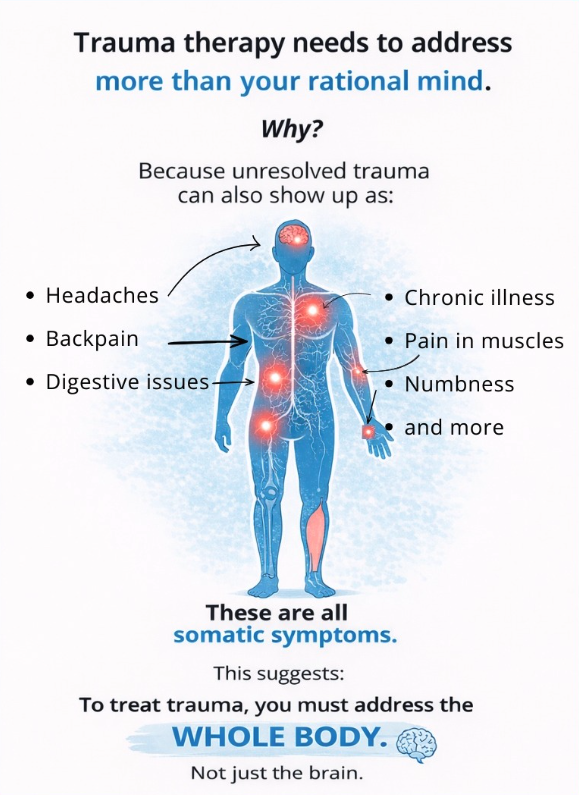
What are physical signs your body is releasing trauma?
During and after trauma processing, people sometimes notice physical sensations like warmth, tingling, shaking, yawning, sighing, or a sudden sense of heaviness lifting. These are normal signs that the nervous system is shifting out of a stress response. You might also notice that tight areas in your body relax, your breathing deepens, or you feel emotionally lighter even if you're also tired. These responses are a healthy part of the healing process and are something we pay attention to throughout ART sessions.